Best Time and Season Guide for Year-Round Diving in the Kerama Islands Okinawa Japan
Diving All Year Round
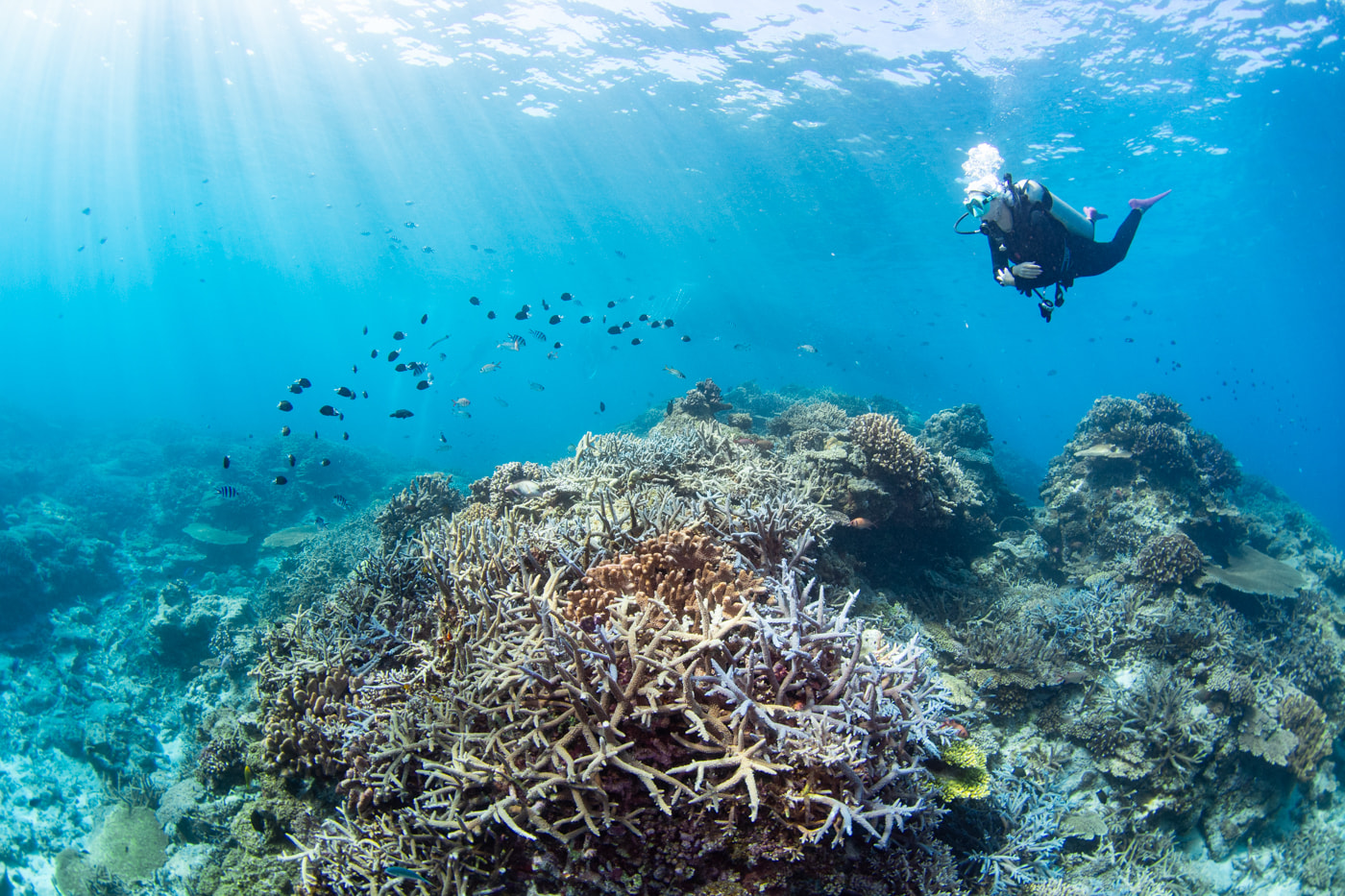
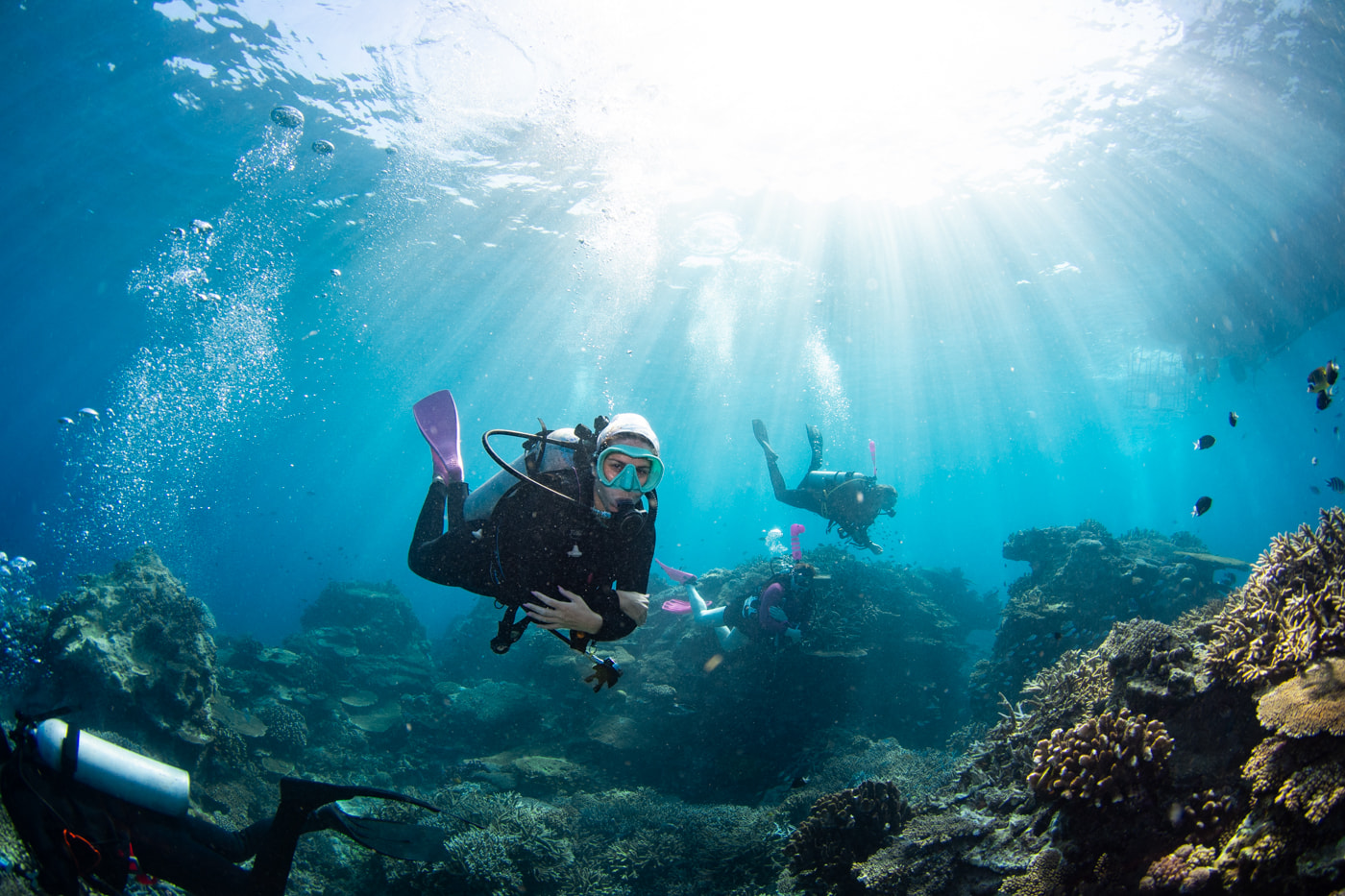
The Kerama Islands are a year-round diving destination. No matter when you visit—spring, summer, autumn, or winter—you can enjoy diving with average visibility of 20 meters or more and calm waters at sheltered dive sites. Divers of all experience levels, from beginners to experienced divers, can enjoy the underwater world of the Kerama Islands.
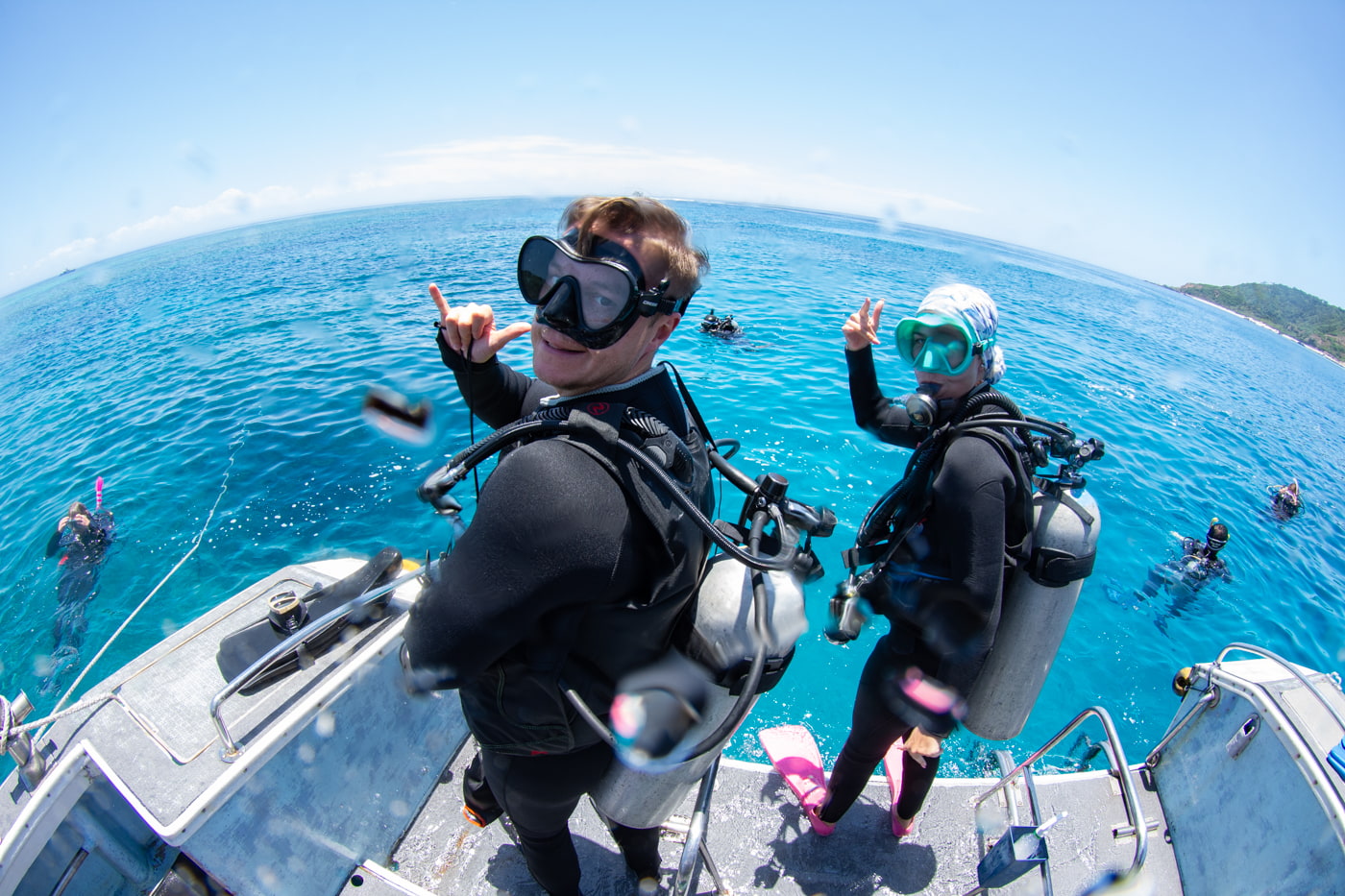
At GOLD Scuba Diving, we specialize in diving in the Kerama Islands and offer daily boat diving tours to the islands. We welcome guests from all over the world and take them on unforgettable diving adventures in the Kerama Islands.
For more information, please check our Tour Details page.
What Changes Depending on the Season?
When diving in the Kerama Islands, there are no major changes in the underwater environment throughout the year. The biggest seasonal difference is the water temperature.
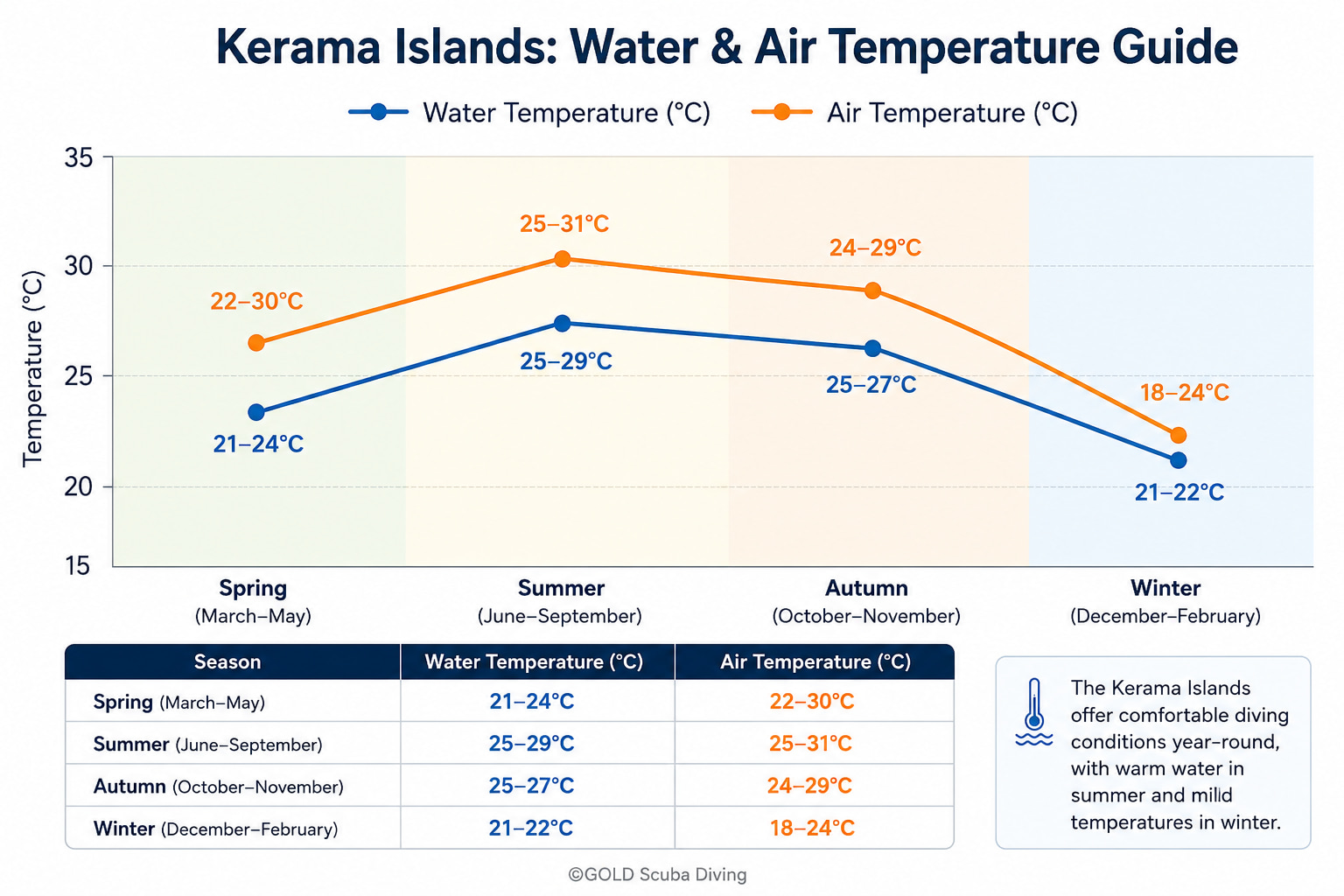
The water temperature is around 21°C at its coldest in winter and can reach approximately 29°C at its warmest in summer.
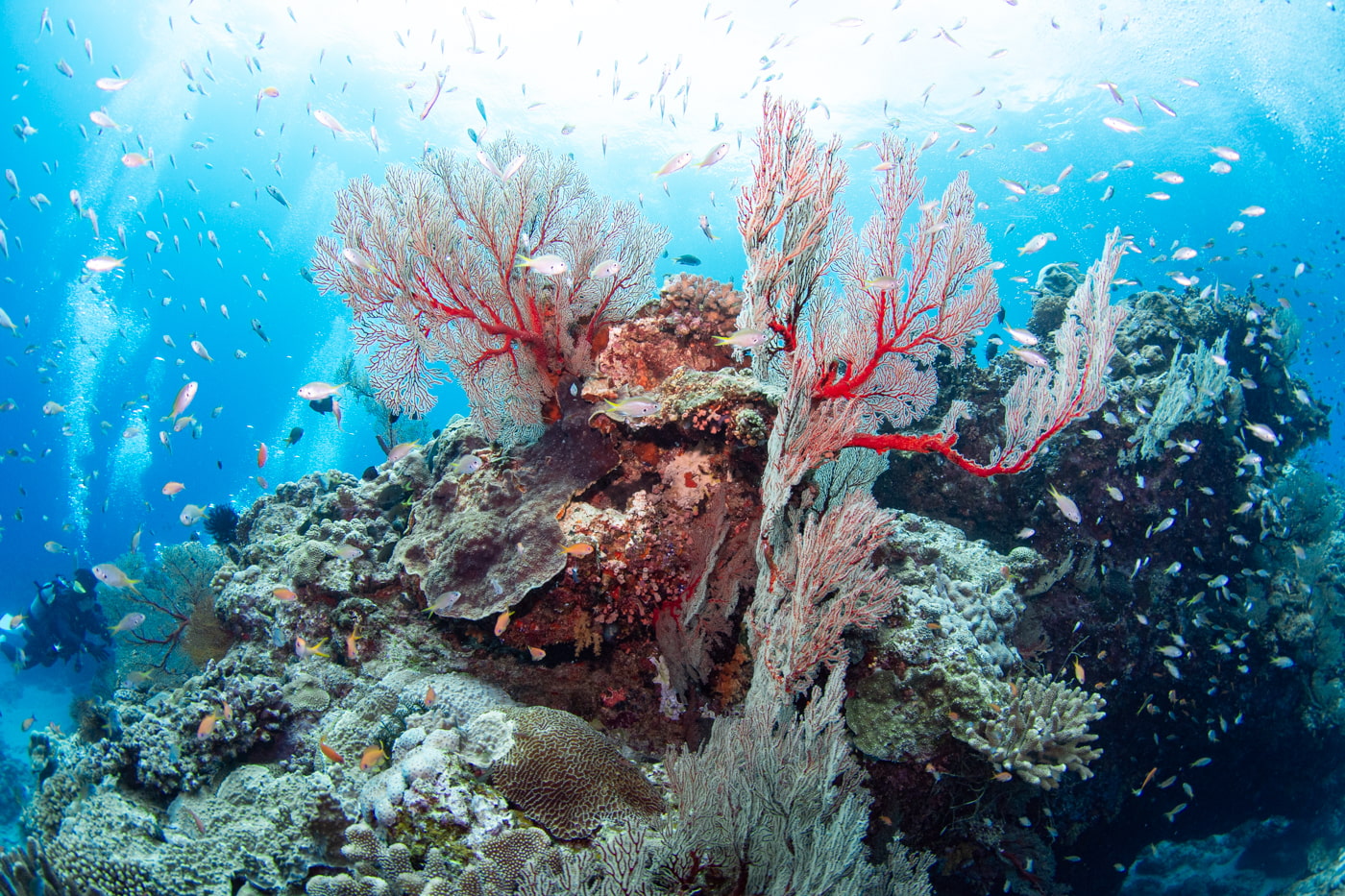
There are also no major seasonal differences in marine life. Most of the marine species found in the Kerama Islands can be seen throughout the year, so you can enjoy a wide variety of underwater life regardless of when you visit.
Seasonal Overview and Water Temperature GuideWater Temperature Guide
In the Kerama Islands, typical water and air temperatures are as follows:
Spring (March–May)
- Water: 21–24°C | Air: 22–30°C
- Visibility: 20 meters or more
In March, the water is still relatively cold, but by around the end of May, the water temperature reaches approximately 25°C.
Summer (June–September)
- Water: 25–29°C | Air: 25–31°C
- Visibility: 20 meters or more
The water temperature is at its warmest, making this one of the best times of year for diving. Sea conditions are often calm, although it is also typhoon season.
Autumn (October–November)
- Water: 25–27°C | Air: 24–29°C
- Visibility: 20 meters or more
Even in autumn, the sea remains warm, making for comfortable diving conditions.
Winter (December–February)
- Water: 21–22°C | Air: 18–24°C
- Visibility: 20 meters or more
There are many days with northerly winds, so we often visit dive sites on the southern side of the islands. Since it is the off-season in Japan, the boats are generally less crowded, making for a more relaxed and comfortable diving experience.
Rental wetsuits are available in 3mm and 5mm. Inner layers can also be used during colder water temperatures.
You can check the most recent water temperatures in our daily dive logs.
Kerama Islands Diving Tour Details
For full details about our Kerama Islands diving tours, please visit the page below.
How to Join a Diving Tour in the Kerama Islands
To join a diving tour in the Kerama Islands, please contact us and make a reservation in advance.
On the day of your dive, we provide free pickup and drop-off by car before and after the diving trip. Our pickup service is available within Naha City only, so if you plan to join our diving tour, please stay at a hotel in Naha City.
Why Choose GOLD Scuba Diving
- Professional, experienced local guides
- Simple and straightforward pricing
- All rental equipment is included for free
- Free underwater photos
Leave your Kerama Islands diving experience to us, the Kerama Islands diving specialists! Our experienced local guides know the dive sites inside and out and will take you to the best spots depending on the conditions.
Booking and Contact
Ready to enjoy unforgettable scuba diving in Okinawa?
For inquiries, please contact us via WhatsApp or the contact form. To make a reservation, please use the booking form.
GOLD Scuba Diving
Explore More on Kerama Diving
- Kerama Diving – Complete Guide
- How to Dive the Kerama Islands from Naha
- Do I Need Advanced Certification to Dive in Okinawa?
- Best Kerama Dive Sites in Okinawa
- Kerama Diving: Best Time & Season Guide for Year-Round Diving
- Is Kerama Diving in Okinawa Suitable for Beginners?
- Kerama Diving Price Guide
- A Day in the Kerama Islands
- Marine Life & Underwater Landscapes in Kerama Islands
- Kerama Diving Okinawa
- Kerama Diving from Naha
- Small Group Diving in Kerama Islands
- Drift Diving in Kerama Islands
- Is One Day of Diving in the Kerama Islands Enough?
- Kerama Diving Safety Tips & Preparation Guide
- Two Days of Diving in Kerama
- Is Kerama Diving Worth It?
- Ear Clearing, Buoyancy & Emergency Response Guide
- Kerama Diving Packing List
- Kerama Diving Visibility